Rovaniemi Weather Guide: Temperatures by Month & What to Pack (2026)
Rovaniemi's weather swings from around -17°C polar nights in January to nearly 24 hours of daylight in June, and knowing which month you're actually dealing with matters more than any single "Lapland is cold" assumption. Here is the real month-by-month data: temperatures, daylight hours, snow depth, and exactly what to pack for each one.
Choose the activity for your actual month, then check which equipment the specific operator supplies. Weather averages do not confirm a departure.
Snow-season huskies, a summer canoe evening and a dark-season tipi outing make different use of the weather. Filter the shortlist by month and time.
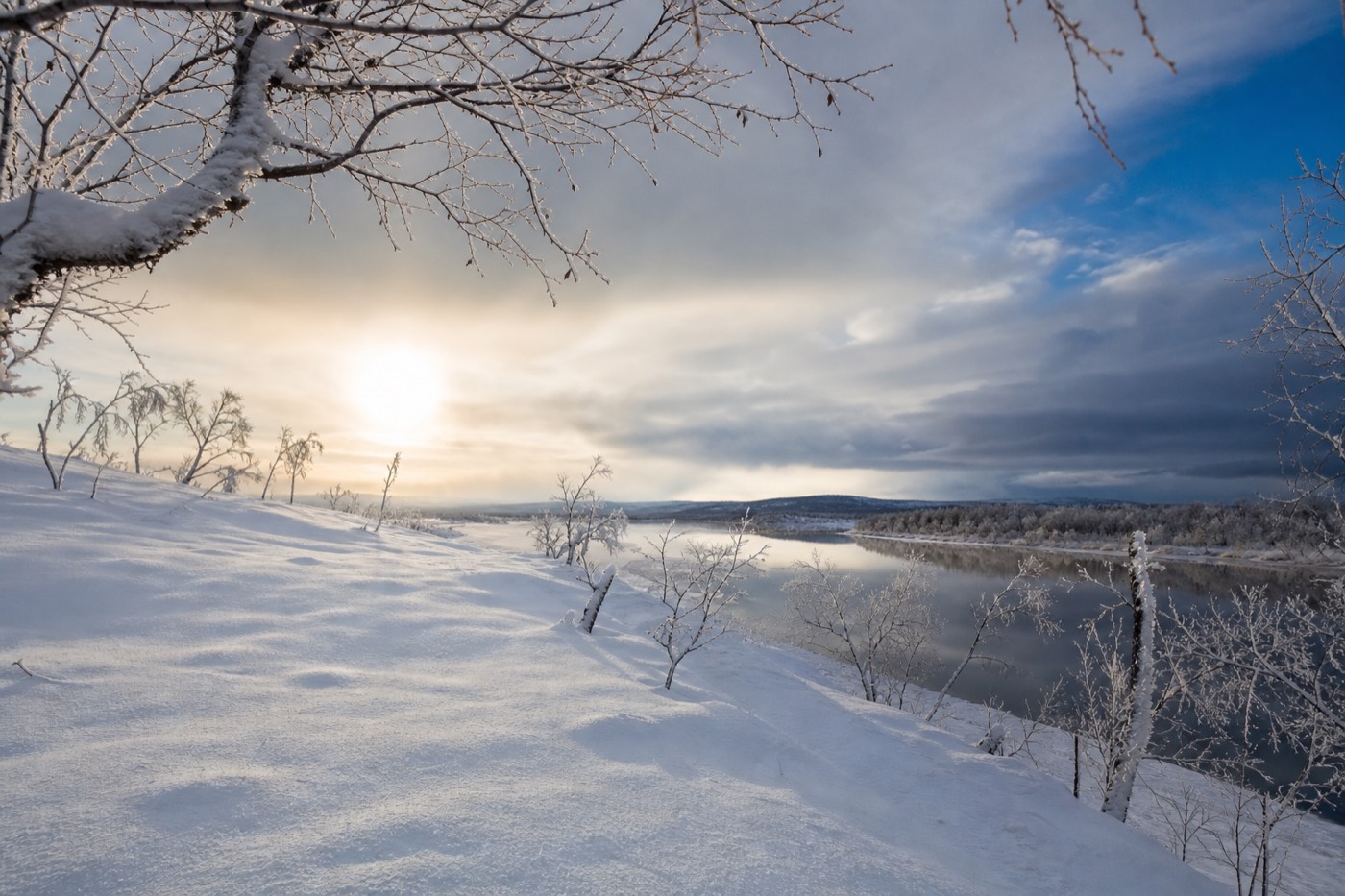
Rovaniemi by month: temperature and daylight at a glance
Figures are 1991-2020 climate normals; any single year's weather will vary somewhat from these averages.
What does a year of weather actually look like in Rovaniemi?
Rovaniemi runs from a deep-winter low of roughly -12°C average in January and February (with cold snaps down near -17°C) up to a July high around 15°C, with snow on the ground from about mid-October through April and daylight that swings from near-total darkness in December to round-the-clock sun in June. That range is the whole story in one sentence, but it is the month-to-month shape of it that actually decides what you pack, what you can do, and when to go.
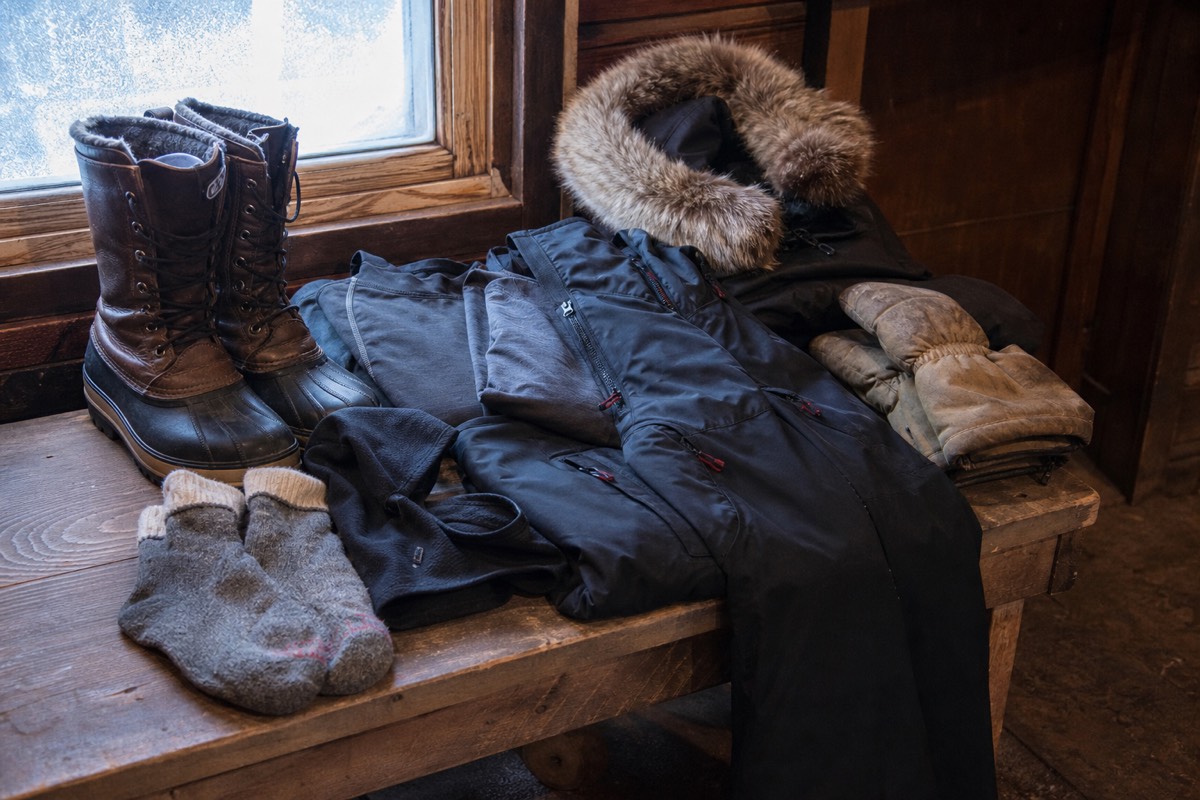
Most people picture one version of Lapland: deep snow, dark skies, huskies. That is real, but it is only true for about five months of the year. The other seven look completely different, and some of them, May, June, September, barely resemble "Arctic" weather at all. This guide breaks down what the numbers actually say, month by month, using climate normal data rather than any single trip's weather. If you are deciding between January and March for the classic winter experience, or wondering whether a June visit even makes sense, the tables below give you the real numbers to work from.
Two things drive almost everything else here: temperature and daylight. They do not move together the way you might expect. The coldest months, January and February, are not the darkest month, that is December. The longest daylight, June, is not the warmest month, that is July. Understanding both curves separately, rather than assuming dark equals cold, is the difference between packing correctly and getting caught out.
For the experience side of a Rovaniemi trip, what December is actually like on the ground, how busy it gets, when to book, that is covered in our guide to what to expect in Rovaniemi in December. And if you are still deciding which month to visit based on what you want to see and do, not just the raw numbers, our best-time-to-visit guide walks through the trade-offs season by season. This page is the reference underneath both of those: the actual temperatures, daylight hours, and snow data for every month.
What's the average temperature in Rovaniemi by month?
Average temperatures range from a January and February mean of about -12°C to a July mean of about 15°C, with the transition months of April and October sitting close to freezing at roughly 0°C. These are 1991-2020 climate normal figures, the standard 30-year baseline meteorologists use, not a single year's weather, so treat them as a reliable planning range rather than a forecast for your specific week.
| Month | Average low (°C) | Average high (°C) | Mean (°C) |
|---|---|---|---|
| January | -17.0 | -7.4 | -12.2 |
| February | -17.2 | -7.0 | -12.1 |
| March | -12.9 | -1.1 | -7.0 |
| April | -5.5 | 4.6 | -0.4 |
| May | 1.2 | 11.6 | 6.4 |
| June | 7.0 | 17.2 | 12.1 |
| July | 10.3 | 20.6 | 15.4 |
| August | 8.0 | 17.7 | 12.8 |
| September | 3.6 | 11.7 | 7.7 |
| October | -2.2 | 3.6 | 0.7 |
| November | -8.0 | -1.8 | -4.9 |
| December | -13.4 | -5.0 | -9.2 |
A few things stand out. February is barely different from January, both sit around -12°C mean, which surprises people who assume January is automatically the coldest month everywhere. The real deep-freeze window is those two months together, not January alone. March then drops the average by roughly five degrees compared to February as the sun starts doing real work, and by April the mean has climbed above -1°C, close to 12 degrees warmer than February.
The summer side is shorter and less extreme. Only July genuinely breaks into what most people would call warm weather, with a mean near 15°C and highs that reach the low 20s on good days. August cools quickly, and by September the mean is back down near 8°C. According to climate data compiled by Climates to Travel's Rovaniemi page, this rapid swing between a short, mild summer and a long, cold winter is typical of the subarctic climate zone Rovaniemi sits in, just south of the Arctic Circle.
One more pattern worth noting: the daily min-max spread barely changes across deep winter. In January the gap between average low and average high is about 9.6 degrees; in July it is about 10.3 degrees. Winter days in Rovaniemi do not swing wildly between a freezing morning and a mild afternoon the way some continental climates do. Whatever the average is for that month, expect to feel close to it most of the day.
How cold does deep winter actually feel, in January and February?
January and February average around -12°C, with regular nights down to -17°C and occasional cold snaps well past -20°C, but this is dry cold with little wind chill in Rovaniemi's inland forest setting, so it reads as more manageable than the raw number suggests once you are dressed for it. This is the coldest stretch of the year by a comfortable margin, and it is also peak season for exactly the reasons people fly in for: reliable deep snow, dark clear nights for aurora, and the full Arctic Finland scene.
-17°C sounds dramatic if you are coming from a climate where winter rarely drops below freezing. In practice, the cold at this latitude behaves differently than a damp, windy -5°C somewhere coastal. Rovaniemi sits inland, away from open sea, so the air is typically dry and still rather than raw and biting. Many visitors find that -17°C in Lapland, properly dressed, feels more tolerable than a windy, wet 0°C somewhere else. The number matters less than the humidity and wind that usually accompany it, and both tend to work in your favor here.
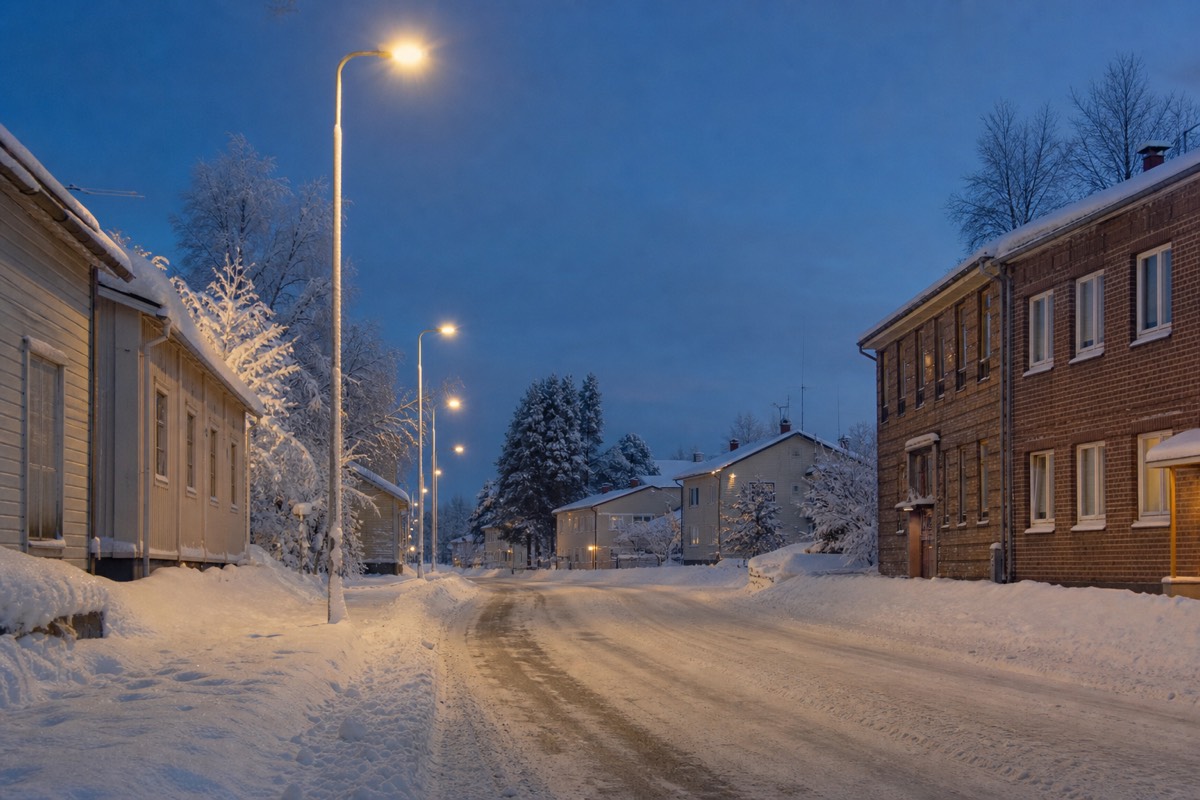
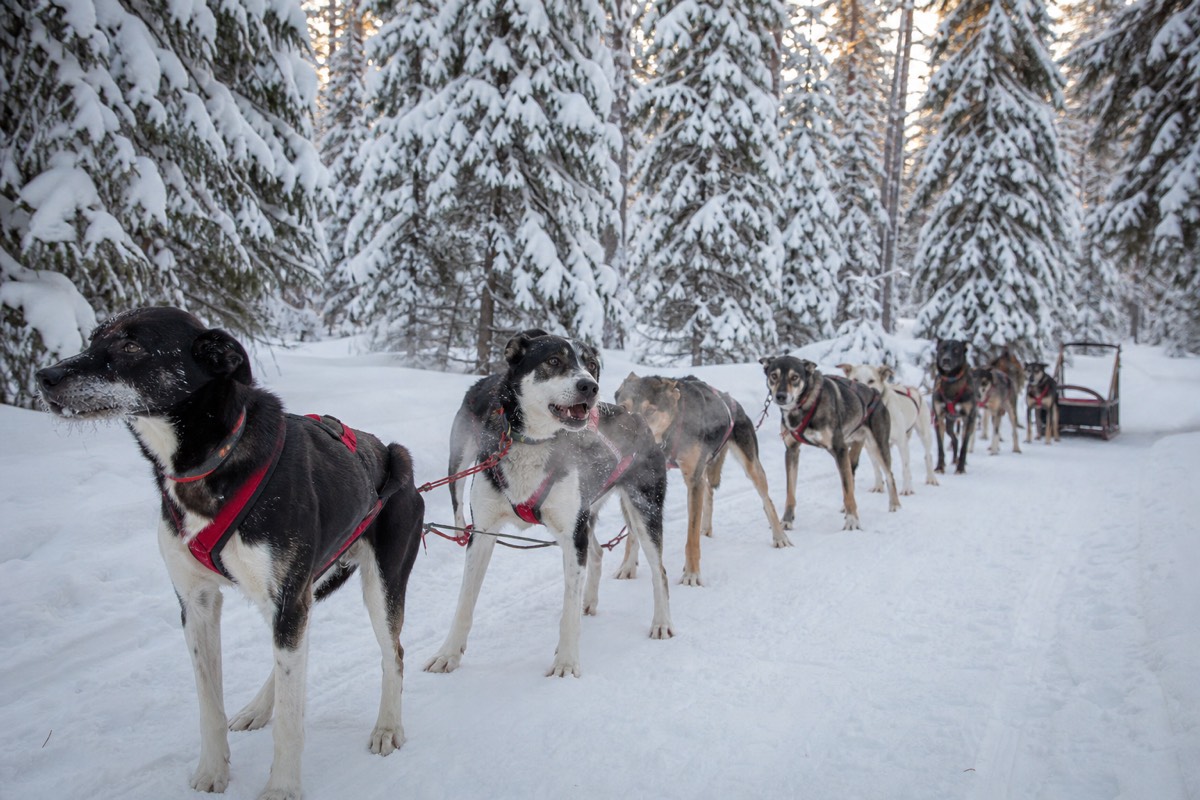
That said, properly dressed is doing a lot of work in that sentence. Exposed skin, wet gloves, or standing still for long stretches outdoors at -17°C is genuinely uncomfortable and can be risky within minutes, not hours. This is the temperature band where the packing advice later in this guide stops being optional. It is also why almost every tour operator running excursions in this window, husky sledding, snowmobiling, aurora hunting, supplies a thermal overall suit as part of the package. You are not expected to own arctic-grade gear yourself, you are expected to layer sensibly underneath what is provided.
| Mean temperature band | What it actually feels like | Minimum gear needed |
|---|---|---|
| -12°C to -17°C (Jan, Feb) | Sharp, dry cold. Fine for 1-3 hours outdoors if dressed properly, uncomfortable within minutes if not. | Full thermal layering, arctic-rated boots, face cover |
| -7°C to -9°C (Mar, Dec) | Cold but manageable, closer to a hard frost than a deep freeze. | Heavy winter coat, thermal base layer, warm boots |
| -1°C to -5°C (Apr, Nov) | Damp cold, more about wet feet than freezing air. | Waterproof boots, warm mid-layer, gloves |
| 6°C to 8°C (May, Sep) | Cool spring or autumn air, comfortable by day, cold after sunset. | Layers, light jacket, warm layer for evening |
| 12°C to 15°C (Jun-Aug) | Mild Nordic summer, warm in direct sun, cool in shade or near water. | Light layers, windbreaker, sunglasses |
How many hours of daylight does Rovaniemi get through the year?
Daylight swings from roughly 2 hours 33 minutes around the December 21 solstice to close to 24 hours of continuous light around the June 21 solstice, with the true midnight sun period, when the sun never sets, running from about June 7 to July 6. This is the variable that changes the entire character of a trip more than temperature does, and it is the one most first-time visitors underestimate.
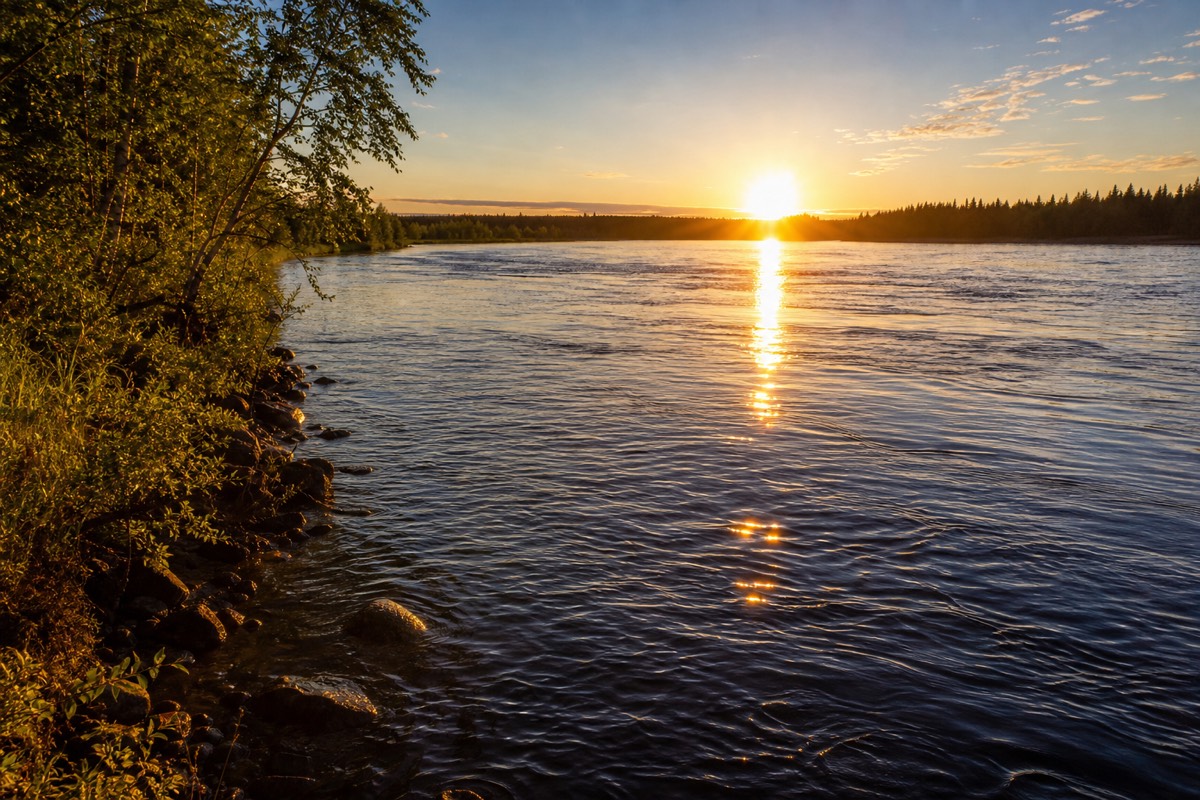
The shift happens fast. Between the November 1 sample point, roughly 7 hours 31 minutes of daylight, and the December solstice, daylight drops sharply in a matter of weeks. The same acceleration happens in reverse heading into spring: by March 1 the day has already stretched to almost 10 hours, and by May 1 it is past 17 hours. According to sunrise and sunset data tracked by Husky Park's Rovaniemi daylight page, the length of day changes especially fast through the spring and autumn transitions, faster than most visitors from lower latitudes are used to.
| Date | Sunrise | Sunset | Daylight |
|---|---|---|---|
| January 1 | 10:50 | 13:43 | 2h 44m |
| March 1 | 07:33 | 17:27 | 9h 53m |
| May 1 | 04:31 | 21:59 | 17h 28m |
| June 21 (solstice) | sun does not set | sun does not set | ~23h 24m-24h |
| September 1 | 05:48 | 20:43 | 14h 54m |
| November 1 | 08:13 | 15:45 | 7h 31m |
| December 21 (solstice) | sun stays below horizon | sun stays below horizon | ~2h 33m-2h 44m |
Two practical consequences follow from this. First, if you are visiting in December or early January, plan around roughly two and a half to three hours of actual daylight and build your day accordingly, most tours in this window run in what would be evening light elsewhere, and that is normal, not a scheduling problem. Second, if you are visiting in June or July for the midnight sun, be ready for the opposite adjustment: hotel blackout curtains matter, and your body's sense of bedtime will need active management since it never actually gets dark.
September and March are the two months where daylight sits closest to what most visitors consider normal, somewhere between 10 and 15 hours, which is part of why they work well as lower-key alternatives to the December and January extreme. Neither month is dark all day or light all night, both feel closer to a regular autumn or spring day elsewhere, just colder.
When does the snow arrive, and when does it melt?
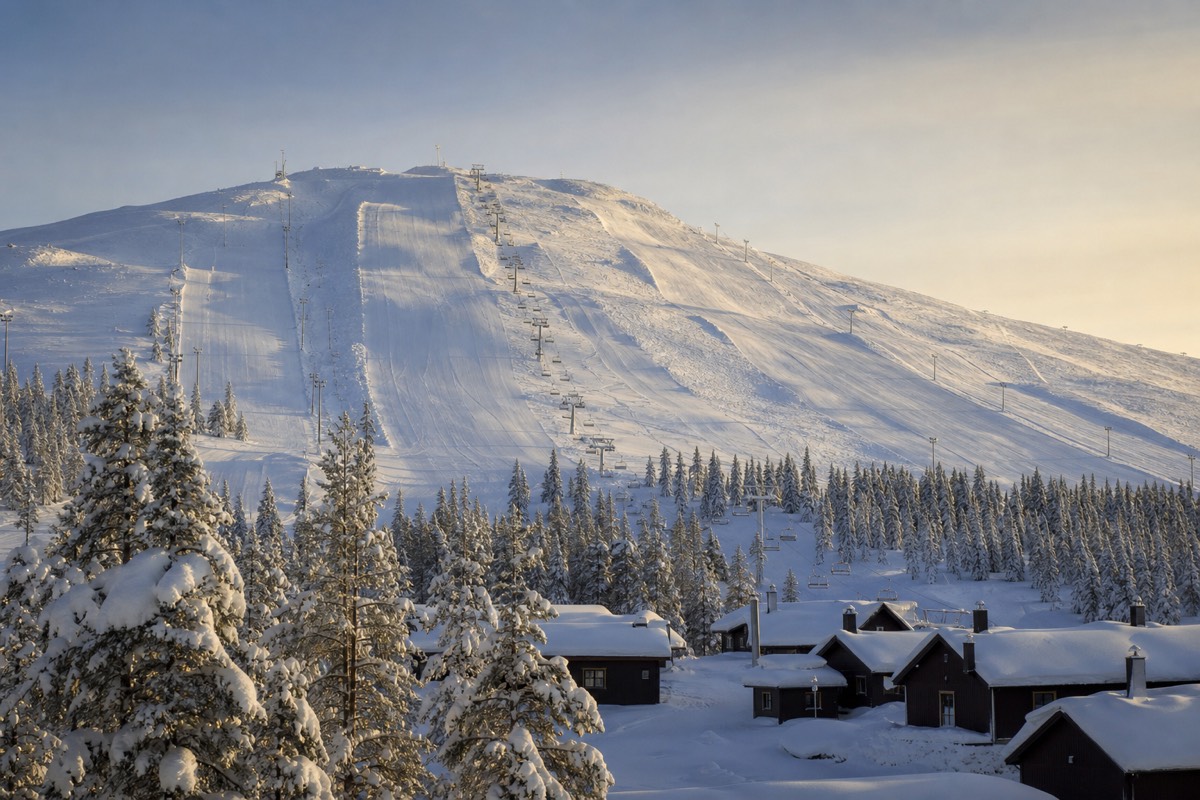
Snow typically settles on the ground in Rovaniemi from around mid-October and stays through April, building to a seasonal maximum depth of roughly 75cm by March before melting through April and into May. That six-month window is longer than most visitors expect, and it is the reason winter activities here run on a wider calendar than just December and January.
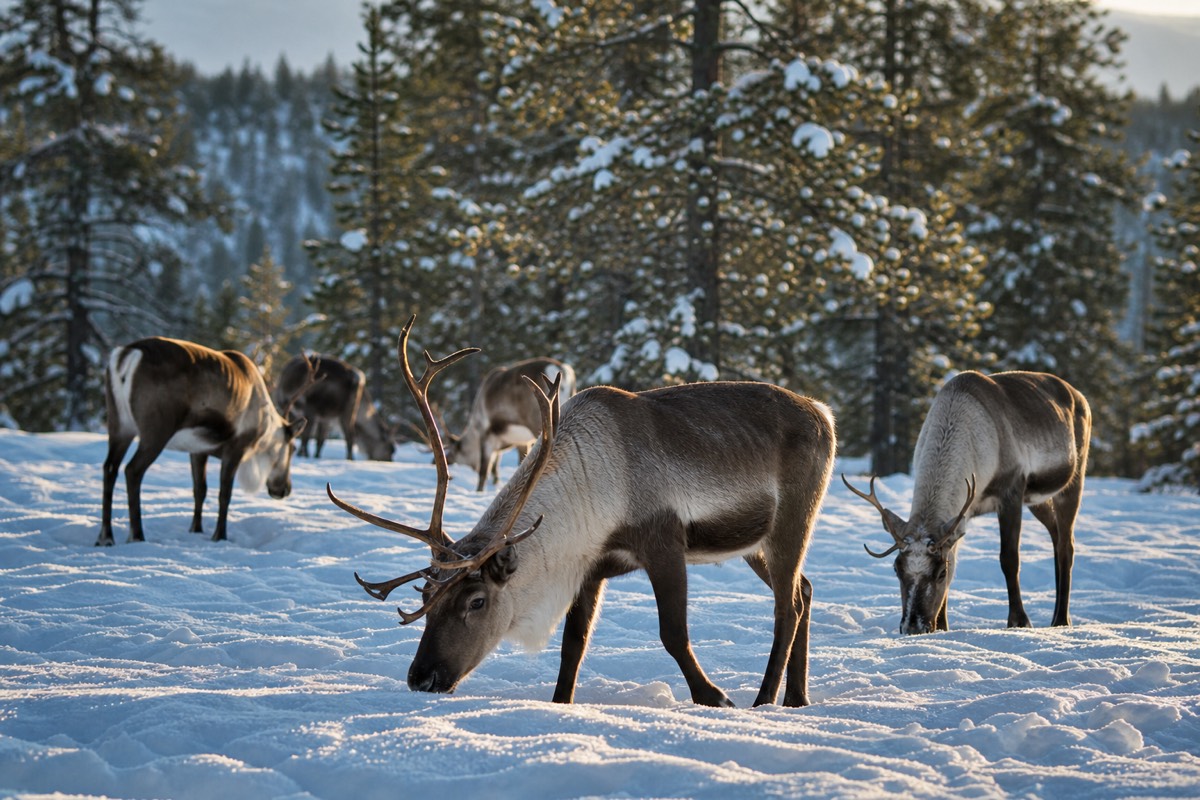
The build-up is not instant. Early snow in mid-to-late October is often thin and inconsistent, more a preview than a reliable base. By November it is accumulating steadily, and by December there is enough of a base for snowmobiling and husky sledding to run properly. January and February add depth on top of an already solid base, and March is typically the deepest point of the whole year, that roughly 75cm figure represents months of accumulated snowfall, not a single storm.
April is the pivot month. Snow is usually still present for most of it, especially away from the city center, but daytime temperatures climbing above freezing, the April mean high is 4.6°C, start eating into the base, particularly in direct sun. By May the ground is largely clear or clearing fast as the thaw takes over, and from June through September Rovaniemi is a snow-free green landscape, forests, rivers, and lakes, that looks nothing like its winter postcard version.
| Month | Snow on the ground | Notes |
|---|---|---|
| October | Arriving, inconsistent early | First snow often mid-to-late month |
| November | Building steadily | Base becomes reliable by late month |
| December | Solid cover | Good for snow-dependent tours |
| January | Full cover, deepening | Peak winter activity window |
| February | Full cover, near peak | Peak winter activity window |
| March | Deepest of the year | Around 75cm typical depth |
| April | Present, melting later in month | Snow thins fast once daytime highs pass 0°C |
| May | Largely gone | Occasional late patches in shaded areas |
| June-September | None | Green season |
For anyone booking a snow-dependent activity, husky safaris, snowmobile tours, this table is really the one that matters more than the temperature table. December through March is the safe window for reliable snow depth. Late November can work but is riskier for a guaranteed deep base, and April is genuinely a coin flip depending on how that particular year's thaw is running.
What should you actually pack for each season?
Deep winter, December through February, needs full thermal layering down to boots rated at least -30°C, shoulder season in March and November works with a standard heavy winter coat over a thermal base layer, spring and early autumn in April and September call for waterproof layers you can add and remove, and summer from June to August needs little more than light layers and a windbreaker for evenings. Very little of this requires buying specialist arctic gear outright, since most winter tour operators supply the heaviest items.
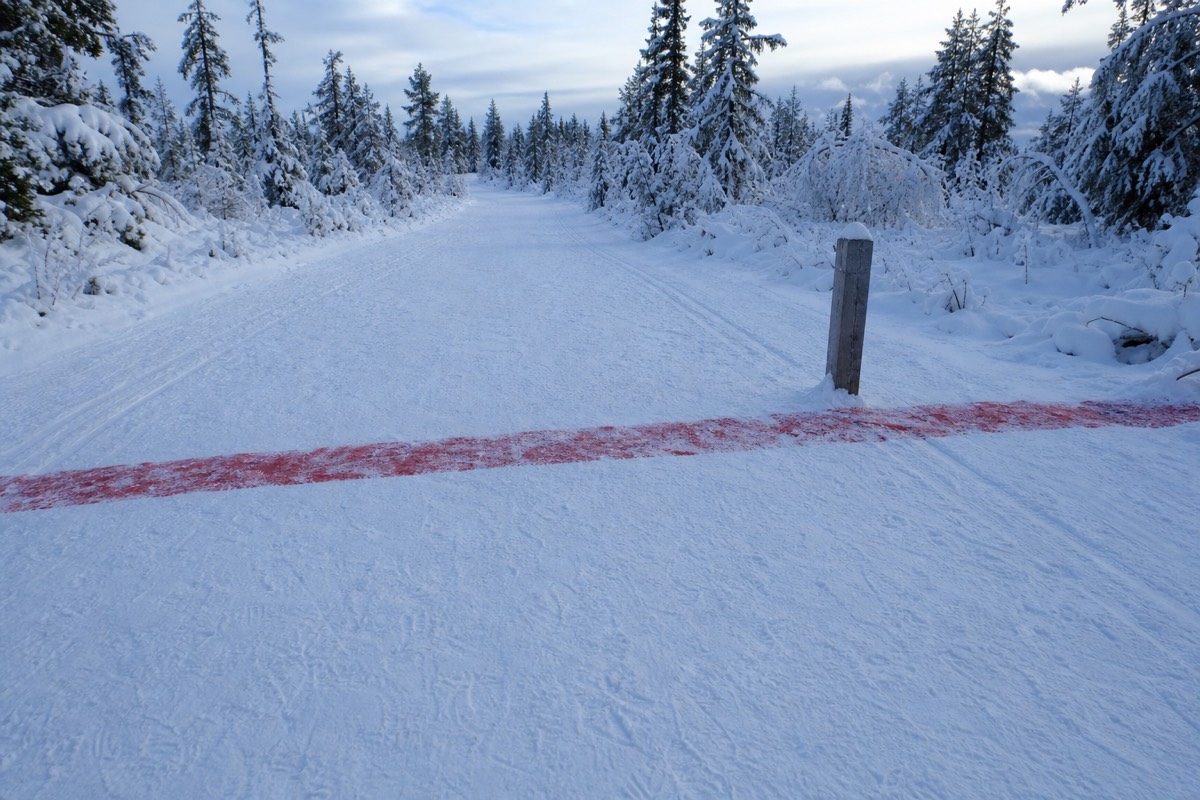
For deep winter, the layering system that actually works is a moisture-wicking thermal base layer, top and bottom, an insulated mid-layer, and an arctic-grade outer shell, plus wool socks with a thin liner sock underneath, boots rated to at least -30°C, and separate coverage for your face, neck, hands, mittens over gloves trap more heat than gloves alone, and head. This sounds like a lot, and it is, but almost none of it needs to be purchased specially for one trip. Most operators running husky safaris, snowmobile tours, and aurora chases provide a thermal overall suit as part of the booking, on top of your own base layers. Renting or using operator-supplied gear for the outer shell and boots is the norm here, not a compromise, and it means you can pack a carry-on rather than an expedition kit.
Shoulder season, March and November, is more forgiving than people expect given how the calendar looks. Mean temperatures sit between -5°C and -13°C, cold, but a standard heavy winter coat with a thermal layer underneath handles short outdoor stretches fine. The main thing to get right is footwear: ice underfoot is common in both months, so proper grip matters more than raw warmth.
April and September sit on opposite sides of the snow line but need similar kit: layers you can add and remove as the day swings between a cool morning and a milder afternoon, waterproof shoes, April is genuine slush season as the snowpack melts, and a warm layer for evenings once the sun drops. Summer, June through August, is the easiest packing list of the year: light layers, a windbreaker for evenings and for anywhere near water, sunglasses, daylight is close to constant, and insect repellent if you are visiting in July, mosquito season peaks in forests and near lakes that month, though it is a much smaller issue in the city center itself.
| Season | Typical mean range | Core layers | Footwear | Extras |
|---|---|---|---|---|
| Deep winter (Dec-Feb) | -9°C to -12°C | Thermal base plus insulated mid-layer plus arctic shell, often operator-supplied overall | Boots rated -30°C or better | Face and neck cover, mittens over gloves, wool plus liner socks |
| Shoulder (Mar, Nov) | -5°C to -7°C | Heavy winter coat plus thermal base layer | Warm boots with good grip for ice | Hat and gloves, no need for full arctic kit |
| Thaw / early autumn (Apr, Sep) | -0.4°C to 7.7°C | Removable layers, mid-weight jacket | Waterproof shoes, slush in April | Warm layer for evenings |
| Summer (Jun-Aug) | 12°C to 15°C | Light layers, T-shirt plus jacket | Regular walking shoes | Windbreaker, sunglasses, insect repellent in July |
Is Rovaniemi colder than what you're used to at home?
For visitors from mild maritime climates like the UK or Pacific Northwest, or from warm and subtropical regions like the southern US, southern Europe, or Australia, Rovaniemi's winter is dramatically colder than anything they experience at home. For visitors from continental four-season climates, much of the US Midwest and Northeast, or central and eastern Europe, it is a more extreme version of a winter they already know, not an entirely unfamiliar one. The honest answer depends entirely on where you are starting from, which is why generic how-cold-is-Lapland advice online is often unhelpful.
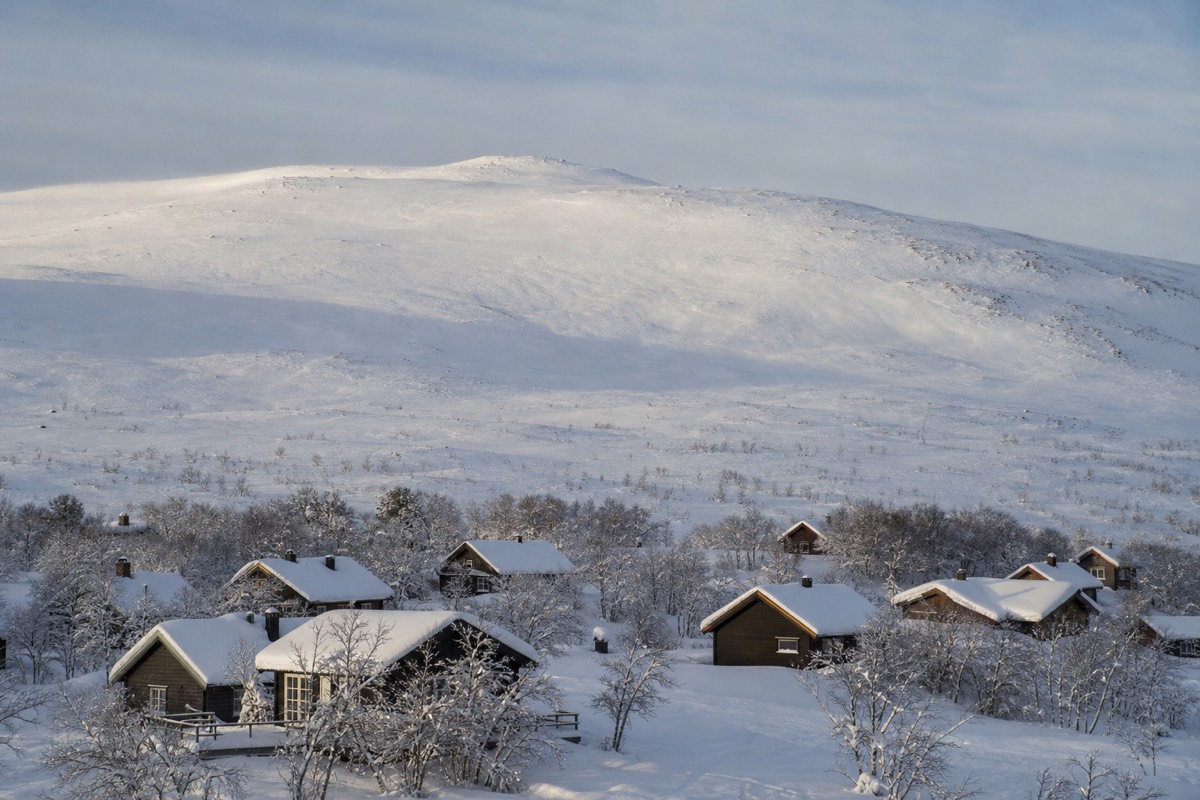
If home winters rarely see hard frost, the jump to -12°C average with -17°C nights is genuinely a different category of cold, not just a colder version of what you know. Everything from breathing through cold air, to walking on packed snow, to knowing when your hands have been exposed too long, is unfamiliar territory. This is not a reason to avoid it, thousands of visitors from exactly these climates come every winter, but it is a reason to take the packing guidance seriously rather than assuming a normal winter coat will do.
If you already live somewhere that regularly sees sub-zero winters, Rovaniemi will feel familiar in kind, just turned up. The main adjustments are the boots, most home winter boots are not rated for sustained -17°C, the daylight swing, few continental climates lose daylight as dramatically as Lapland does through November and December, and the duration, a Rovaniemi winter holds its cold consistently for months rather than swinging back up between cold snaps the way some continental winters do.
| Home climate type | What Rovaniemi's winter will feel like | Main adjustment needed |
|---|---|---|
| Mild maritime (UK, Pacific Northwest, coastal Western Europe) | An entirely new category of cold, not a colder version of home | Full arctic layering system, no shortcuts on boots |
| Warm or subtropical (southern US, southern Europe, Australia) | The coldest weather most visitors from these regions will ever experience | Same as above, plus mental preparation for the daylight shift |
| Continental four-season (US Midwest/Northeast, central/eastern Europe) | Familiar in kind, more extreme and more sustained | Colder-rated boots than you likely own at home, plan for the daylight swing |
None of this is a reason to over-pack or under-pack blindly. It is a reason to look at the actual numbers on this page rather than assume, and to lean on operator-supplied gear for the parts, the outer shell, the boots, that are hardest to get right from a home closet.
What are the midnight sun and polar night, exactly?
The midnight sun is the period, roughly June 7 to July 6, when the sun never sets in Rovaniemi at all. The polar night is the opposite extreme in late December and early January, when the sun never rises above the horizon and the day stays in twilight or darkness throughout. Both are a direct result of Rovaniemi's position just south of the Arctic Circle, where the earth's tilt takes the sun's path either fully above or fully below the horizon for weeks at a stretch.
Neither is as absolute as it sounds in every direction. Around the December solstice, polar night in Rovaniemi still delivers a few hours of blue twilight around midday, not true blackout darkness, roughly matching the 2h33m to 2h44m of daylight shown in the table above. Around the June solstice, the midnight sun genuinely does not set, the sun is visible at midnight, circling low on the horizon rather than dipping below it.
The full mechanics of why this happens, and what it is actually like to experience either one, are covered in more depth in our separate guide to the midnight sun. For trip planning purposes, the two dates that matter are the ones already in the tables above: expect near-total light from roughly June 7 to July 6, and expect the shortest, darkest stretch of the year in the days around December 21.
How does the weather actually shape what you can do here?
Aurora viewing needs clear, cold, dark skies, so it is realistically a September-through-March activity built around the long nights in the table above. Deep snow for husky sledding and snowmobiling needs the December-through-March window when the base is reliably solid, and anything built around constant daylight, like the midnight sun itself, only works in the June-July window. The weather data above is not just background information, it directly determines which tours make sense for which month.
Northern lights hunting depends on dark skies, which rules out the true midnight sun period entirely, there is no darkness for the aurora to appear against between roughly June and July. It also depends on clear weather more than raw cold, a clear -5°C night in November can outperform a cloudy -15°C night in January for actual visibility. That is part of why the aurora season on this site runs wide, from autumn through early spring, rather than being pinned to the coldest months alone. For a deeper breakdown of exactly when the odds are best, see our northern lights timing guide.
Snow-dependent activities are more literal: a husky safari or snowmobile safari needs an actual base of snow to run on, not just cold air. Per the snow table above, that means December through March is the dependable window, with November as an earlier but less certain option and April as a late one that depends on how that year's thaw is tracking. This is also the practical case for why a January or February trip, the coldest weeks of the year, still sells out first: it is the one stretch where snow depth, daylight for aurora-viewing darkness, and full operator schedules all line up at once.
Warmer-season visitors get a different, quieter set of options built around the same data: long daylight for hiking and river activity in June and July, comfortable temperatures without the winter gear list, and, outside July specifically, fewer insects. It is a genuinely different trip, not a lesser one, just built around a different six months of the same yearly cycle.
Does the "avoid this month" advice actually hold up?
Not entirely. November and March, often waved off as shoulder season filler, sit at mean temperatures of about -5°C and -7°C, considerably milder than the -12°C of deep winter, while still keeping enough snow and darkness for most of the classic Lapland activities to run normally. The gap between avoid and deep winter is smaller than the reputation suggests, and the data backs that up directly.
March in particular is a strong case. It is the month with the single deepest snow cover of the year, that roughly 75cm figure, it still has proper cold, and by the end of the month daylight has already stretched past 9 hours, more usable daylight than any deep-winter month offers. It sits right at the edge of aurora season and the tail end of dependable snow, arguably the most balanced month on the calendar rather than a compromise.
November is a fairer case for caution. Snow is still building through the month rather than fully established, so a snowmobile or husky tour booked in early November carries more variability than the same tour in January. Daylight is also dropping fast, down to under 7.5 hours by the start of the month and falling further toward the solstice. It is not a month to avoid outright, but it is the one where checking recent conditions actually matters more than in the settled deep-winter or deep-summer months.
| Month | Mean temp | Snow status | Honest read |
|---|---|---|---|
| October | 0.7°C | Arriving, inconsistent | Genuinely a transition month, snow not yet reliable |
| November | -4.9°C | Building | Workable but variable, check conditions before booking snow-dependent tours |
| December | -9.2°C | Solid cover | Reliable, but shortest daylight and highest demand of the year |
| March | -7.0°C | Deepest of the year | Arguably the best-balanced month, deep snow, real cold, real daylight |
| April | -0.4°C | Melting later in month | A genuine coin flip depending on that year's thaw timing |
The pattern that holds across all of this: the core months, December through February, earn their reputation on darkness and depth of snow, not because the shoulder months are unworkable. If your priority is snow depth and manageable cold rather than the absolute deepest winter experience, March is worth weighing seriously against January and February, using the actual numbers rather than the general assumption that earlier in winter is automatically better.


