Best Time to See Northern Lights in Rovaniemi
When are the Northern Lights best in Rovaniemi? Discover peak months, how cloud cover affects your chances, and why 2024-2026 is one of the best viewing windows in decades.
A guide adds transport, local decisions and photography or a warming stop. Choose the format as carefully as the month; neither a date nor a tour guarantees the sky.
Allow eight hours for a flexible chase or photography outing, versus three to four hours for the lakeside tipi option. Check actual dates after choosing your month.
Last updated: April 9, 2026
Aurora Season at a Glance: Rovaniemi Month by Month
| Month | |||||
|---|---|---|---|---|---|
| August (late) | 3-5 hrs | Good | Good | +10 to +20°C | Season opener – limited dark hours |
| September | 10-14 hrs | Very High (equinox) | Good-Excellent | 0 to +10°C | Excellent – mild, clear, peak activity |
| October | 11-14 hrs | High | Good | -5 to +5°C | Very Good – building darkness, no snow |
| November | 14-18 hrs | Moderate | Poor-Moderate (foggy) | -5 to -15°C | Variable – cloud cover unreliable |
| December | 18-21 hrs | Moderate | Poor-Moderate | -10 to -20°C | Good darkness, heavy cloud risk |
| January | 18-21 hrs | Good | Moderate (improving) | -15 to -30°C | Classic aurora month – extreme cold |
| February | 14-18 hrs | Very Good | Good-Excellent | -12 to -25°C | Excellent – sweet spot month |
| March | 10-14 hrs | Very High (equinox) | Excellent | -5 to -15°C | Best overall – peak activity + clearest skies |
| April (early) | 6-10 hrs | Good | Excellent | -5 to +5°C | Late season, shorter windows, low cost |
Data sourced from Finnish Meteorological Institute records and local aurora operator observations. Verified April 2026.
When Is the Best Time to See the Northern Lights in Rovaniemi?
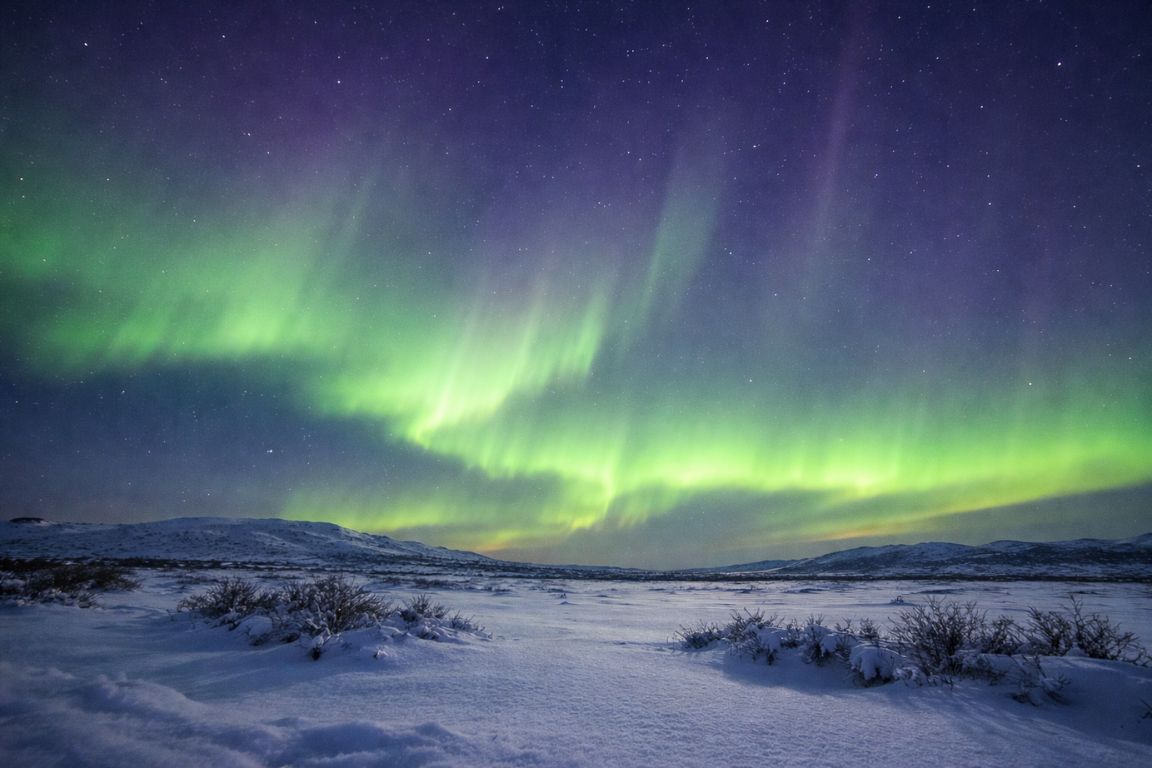 September and March are the two statistically strongest aurora months in Rovaniemi, boosted by the equinox effect that increases geomagnetic activity around Earth’s axis tilts. February ties them closely and adds clearer skies than the deep winter months. The overall aurora season runs from late August to mid-April. Summer is impossible – the sun does not set. The counterintuitive truth: December and January, despite their extraordinary darkness, are not the best aurora months because cloud cover is heaviest then.
This is the thing about aurora hunting that most travel articles get wrong, and it is the piece of information that changes how experienced travelers plan their trips. Everyone assumes that more darkness equals better aurora odds. More darkness means more hours of opportunity, yes. But at Rovaniemi’s latitude, the aurora itself is active on roughly 130 to 150 nights per season. The lights are up there doing their thing on a significant percentage of dark nights. The variable that determines whether you see them is not how long the sky is dark. It is whether the sky is clear.
December and January have 18 to 21 hours of usable darkness per day. They are also the cloudiest months of the aurora season. The same weather systems that deposit beautiful deep snow on the Lapland forest also fill the sky with cloud for days at a time. September and March are shorter on dark hours but statistically clearer. When local guides here have spent years tracking which months produce the most successful aurora sightings per outing, the answer is consistently the equinox months – not mid-winter.
Planning around the Northern Lights or Midnight Sun? Our guide on the best time to visit Rovaniemi tours walks you through exactly when to book for each experience.
If you'd rather let guides with 13 years of sky-reading experience handle the aurora logistics, the aurora hunt with viewing guarantee and unlimited mileage is the tour built around nightly radar checks and a move to clear sky.
Which Months Give You the Best Aurora Odds in Rovaniemi?
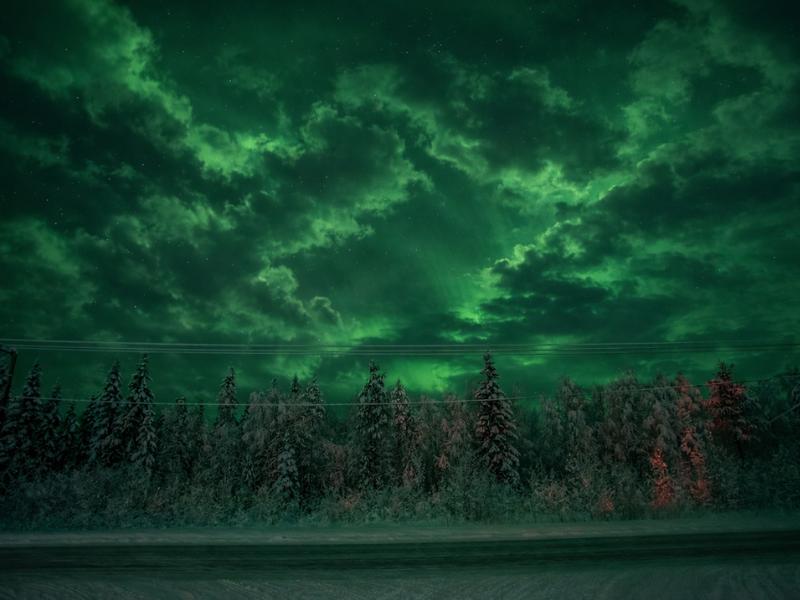
February and March deliver the best overall combination of aurora activity, clear sky frequency, and practical conditions for most travelers. September offers equally high aurora activity with the mildest temperatures of the season and lower costs, but without snow for winter activities. January is the purist’s aurora month – maximum darkness, cold-cleared air, tykky-sculpted trees – but the cloud risk is real and temperatures are extreme. December is the most overrated aurora month despite its marketing as the peak Northern Lights season.
Let’s go through each properly rather than ranking by a single variable.
September stands out as the hidden gem for aurora hunters who do not specifically need snow. Temperatures run 0 to 10°C, which means you can stand outside for extended periods without the full thermal warfare required in January. Cloud cover is lower than deep winter. The equinox effect (explained in full below) produces some of the strongest geomagnetic displays of the year. And the landscape is in ruska – the full Lapland autumn color transformation, so the forest floor and tree canopy are red, orange, and gold during the day while the aurora appears at night. The combination is extraordinary, and almost nobody is there.
February and March run neck and neck for winter travelers. February brings snow at peak depth, all winter activities running, returning daylight that makes snowmobile and husky runs in actual afternoon sun possible, and then long dark evenings for aurora watching. Skies clear more reliably than in December or January. March adds the equinox boost on top of all that. Local aurora guides here consistently point to late February through late March as their highest-success period of the season.
January is cold, dark, and when conditions align – extraordinary. The tykky phenomenon, where weeks of freezing temperatures build layers of ice and snow on every branch until the forest looks alien, peaks in January and February. An aurora display over tykky-sculpted trees in minus 25°C on a clear January night is one of the more surreal things available to humans on this planet. But January cloud cover is significant. A guided tour on a January clear night will drive 200 to 400 km to find the gap. When they find it, the memory lasts a lifetime. When they do not, guests sleep in a heated van parked somewhere dark and cold.
December is not a bad aurora month. It is an expensive, crowded aurora month with heavier cloud cover than the months either side of it, priced at two to four times the rate of January. The darkness is extraordinary. The atmosphere is magical. The probability of a clear viewing night is lower than most travelers expect for the money they spend.
We’ve put together a full peak season breakdown on Rovaniemi tours in December so you know what to expect from crowds, prices, and availability across the busiest weeks of the year.
Rovaniemi Aurora Month Rankings by Key Factor
| Month | ||||
|---|---|---|---|---|
| September | ★★★★★ | ★★★★☆ | ★☆☆☆☆ (mild) | ★★★★★ |
| October | ★★★★☆ | ★★★★☆ | ★★☆☆☆ | ★★★★★ |
| November | ★★★☆☆ | ★★☆☆☆ | ★★★☆☆ | ★★★☆☆ |
| December | ★★★☆☆ | ★★☆☆☆ | ★★★★☆ | ★★☆☆☆ (high cost) |
| January | ★★★★☆ | ★★★☆☆ | ★★★★★ (extreme) | ★★★☆☆ |
| February | ★★★★☆ | ★★★★☆ | ★★★★☆ | ★★★★☆ |
| March | ★★★★★ | ★★★★★ | ★★★☆☆ | ★★★★★ |
| Early April | ★★★★☆ | ★★★★★ | ★★☆☆☆ | ★★★★★ |
What Time of Night Are the Northern Lights Most Likely to Appear?
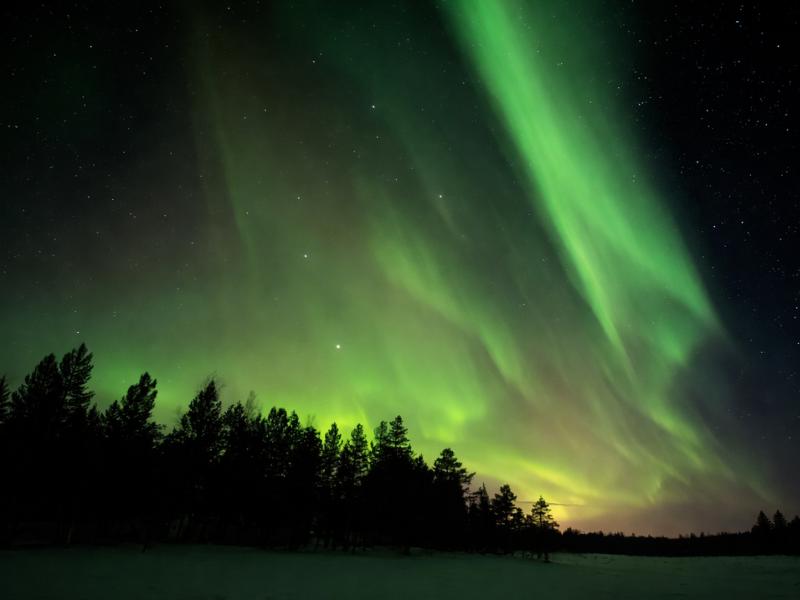
The Finnish Meteorological Institute identifies 9pm to 1am local time as the peak aurora window, with activity peaking closest to magnetic midnight which falls around 11pm to midnight in Rovaniemi. The lights can appear from as early as 7pm on strong activity nights and persist until 3 or 4am. A display can last minutes or hours. Patience is not optional; showing up at 10pm, glancing at the sky for five minutes, and concluding there are no lights is the most reliable way to miss them.
Aurora activity follows the movement of the auroral oval, the ring-shaped zone of maximum activity around the geomagnetic poles. At Rovaniemi’s latitude, this oval passes overhead closest to magnetic midnight. The planet’s rotation brings different longitudes into alignment with the incoming solar wind over the course of the night, which is why 10pm to 2am consistently produces the most activity globally in this season.
In practice, the lights announce themselves in different ways on different nights. On moderate activity nights, a faint green arch appears at the northern horizon first – almost doubtful, almost cloud-shaped, except for the way it moves. That is the tell. Clouds do not move the way aurora moves. The arch brightens, thickens, and if activity strengthens, it begins to extend vertically, throwing curtains up toward the zenith. On strong nights it fills the sky entirely and can take on colors beyond green – white, yellow, faint purple at the edges, and in the best moments red at altitude, visible to the naked eye on KP-5 and above nights.
The guides here have a saying that visitors discover for themselves after the first real display: the best aurora nights are the ones where you stop trying to photograph it. You realize at some point that you are standing there with your phone pointed at something that is moving too fast and too large and too strange to compress into a screen. The lights are overhead and around you and you are just standing in them, saying nothing, because there is nothing adequate to say.
How Does Cloud Cover Affect Your Chances of Seeing the Aurora?
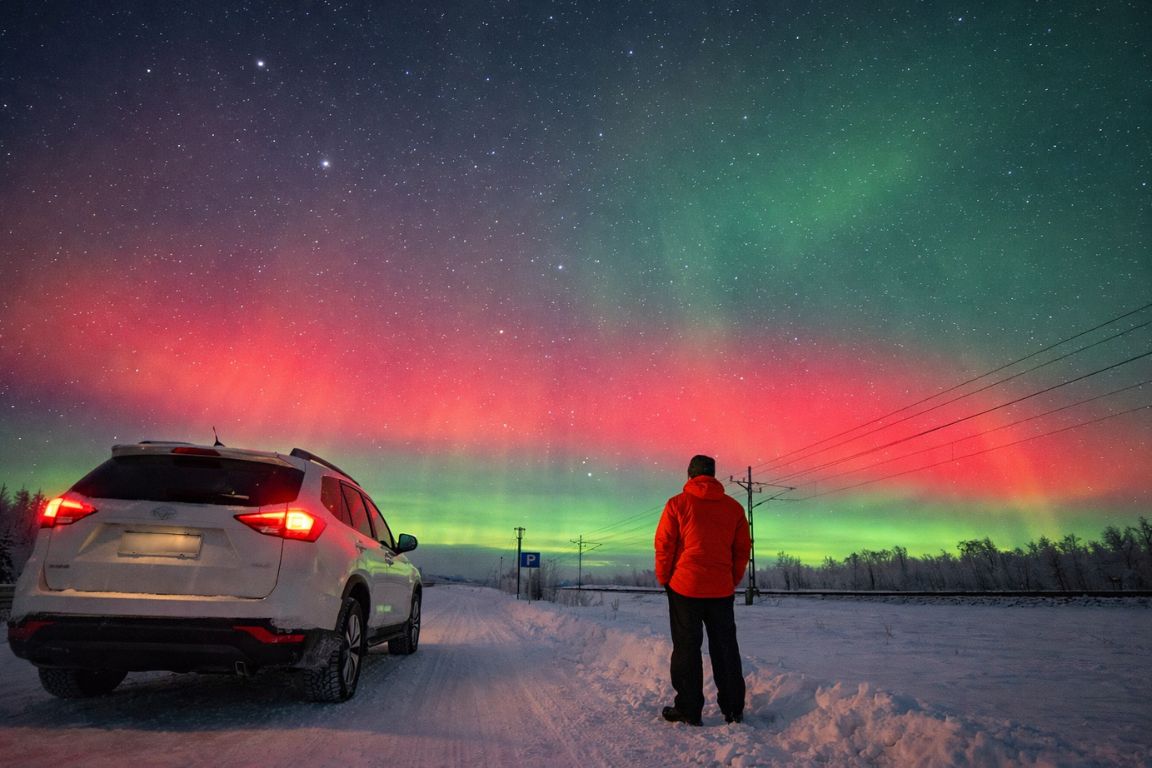 Cloud cover is the primary reason travelers miss the Northern Lights in Rovaniemi – not insufficient aurora activity, not wrong timing, not bad luck. Even the most powerful geomagnetic storm produces nothing visible through overcast cloud. The continental climate of inland Finnish Lapland gives Rovaniemi clearer skies than coastal Norway in general, but December and January carry the heaviest cloud frequency of the aurora season. February, March, and September are the clearest months, which is why they correlate with the highest tour success rates.
This is the part of aurora hunting that nobody fully grasps until they are standing outside under a featureless gray sky at 11pm in Finnish Lapland, looking at their aurora app showing KP-4 activity with a red icon next to the cloud cover reading. The aurora is there. It is physically present above those clouds. It may be filling the sky with green fire directly overhead. You cannot see it.
Finnish Lapland’s inland continental climate gives it a statistical cloud advantage over coastal destinations like Tromsø in Norway. The Scandinavian mountain range shields Lapland from Atlantic moisture systems; Tromsø sits directly in their path. Clear-sky probability during the aurora season averages around 45 to 55% for Rovaniemi versus 35 to 40% for coastal Norway. That gap is significant over a five- or seven-night stay.
Within Rovaniemi’s own seasonal pattern, the difference matters even more. November and December bring the heaviest snowfall and cloud frequency of the year. Guides running aurora tours during these months routinely drive 300 to 500 km in a single night following cloud gaps. Some operators have driven 800 km in a single night. When they find clear sky, they stop and watch. The client who paid for a guided tour has a guide doing this navigation for them. The traveler self-hunting from a fixed location has only the sky they are standing under.
The practical implication: choose accommodation in the city center where guides pick you up, book a guided tour with a reputable operator who monitors real-time weather radar, and accept that some nights will produce nothing regardless. Three to five aurora attempts across a week is the minimum to reliably expect at least one clear sighting. Seven nights essentially guarantees it, weather permitting.
Chasing the Northern Lights from your bed? Our guide on where to stay in Rovaniemi tours walks you through the best glass igloo resorts and aurora cabins worth the splurge.
What Is the Equinox Effect and Why Does It Matter for Aurora Hunters?
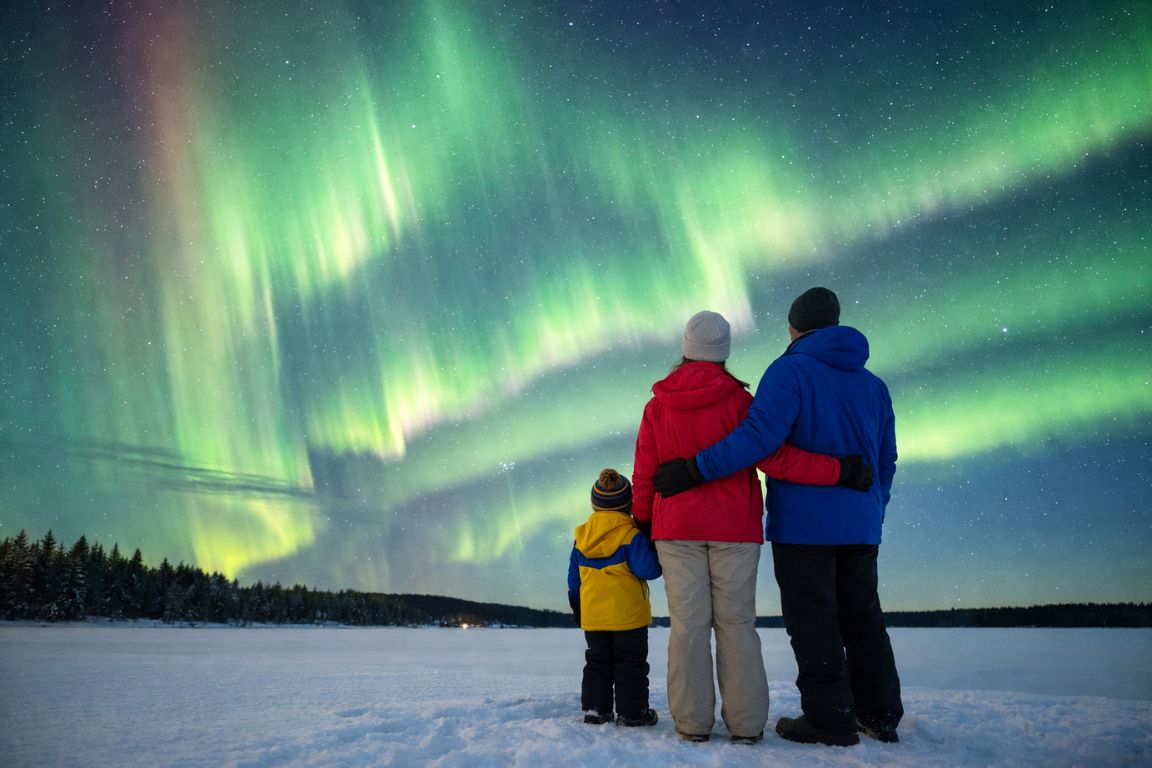 The equinox effect – formally the Russell-McPherron effect, named for geophysicists Christopher Russell and Robert McPherron who described it in 1973 – is the scientifically documented increase in geomagnetic activity that occurs around the March and September equinoxes each year. Earth’s magnetic field geometry during the equinoxes allows more solar wind particles to enter the magnetosphere, producing stronger and more frequent aurora displays. Statistically, aurora activity is nearly twice as likely during equinox months than during mid-winter or midsummer.
The mechanics are worth understanding because they explain why experienced aurora hunters plan trips around the equinoxes rather than simply booking the deepest winter darkness available. Most of the year, Earth’s magnetic field and the magnetic field carried by the solar wind are misaligned – the sun’s field largely bounces off. Around the equinoxes, the geometry changes. Earth’s orientation relative to the solar wind allows the two fields to align more effectively, opening what scientists describe as “cracks” in the magnetosphere. Solar particles stream through more freely. The result is more intense and more frequent displays for several weeks around each equinox.
The data is consistent over decades. NASA’s David Hathaway published analysis showing clear spikes in geomagnetic storm frequency in March and September going back nearly a century of records. The Finnish Meteorological Institute’s own data shows the same pattern. Rovaniemi guides with years of personal observation confirm what the science predicts: late September and late March reliably produce some of the most dramatic aurora nights of any given season.
The equinox window is not a single night – the effect builds for several weeks before and after each equinox. For practical trip planning, this means September 10 through October 10 captures the autumn equinox window, and March 1 through April 10 captures the spring equinox window. Both periods represent the highest statistical probability for strong aurora in any given season.
Questions about when to plan your specific trip for the best aurora odds? Start with the Northern Lights tours and match a departure to the month you are considering.
How Does the Solar Cycle Affect Northern Lights Visibility in 2025 and 2026?
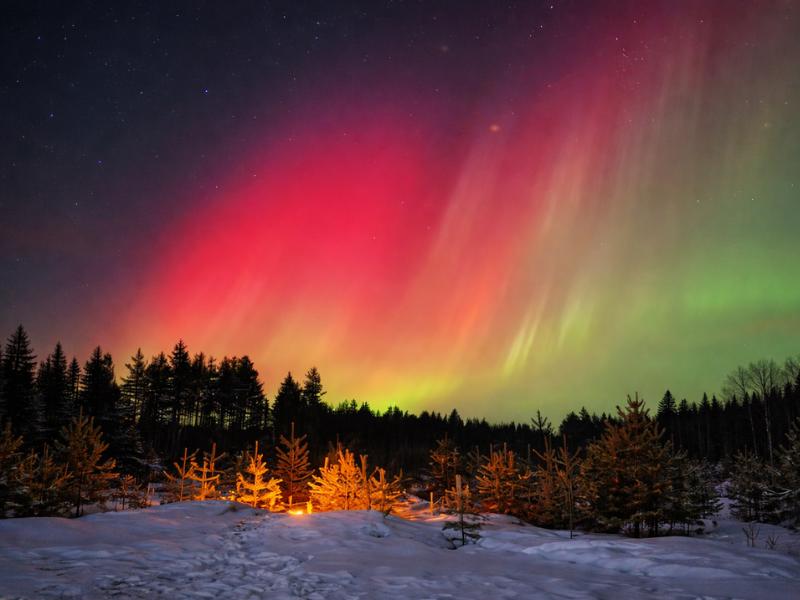
We are in an exceptional window. Solar Cycle 25 peaked in late 2024 with a rare double maximum that was dramatically stronger than scientists predicted – the most active solar cycle in over 20 years. Elevated activity continues through 2026 before the 11-year cycle begins its descent toward solar minimum. For anyone planning a Rovaniemi aurora trip in 2025 or 2026, this is the best solar window since the early 2000s. After 2026, activity will decline progressively and may not return to current levels until the mid-2030s.
The 11-year solar cycle matters because it sets the baseline intensity of aurora activity. During solar minimum, displays at Rovaniemi’s latitude are relatively common but modest. During solar maximum, the same location sees more frequent, brighter, and more expansive displays. The difference is measurable: during Solar Cycle 24 (the weak cycle from 2008 to 2019), aurora at Rovaniemi was a quiet, relatively predictable phenomenon. Solar Cycle 25 shattered every prediction scientists made for it. Instead of a below-average cycle, it produced a double-peaked maximum with smoothed sunspot numbers exceeding 180 – levels not seen since Cycle 23 two decades earlier.
The practical consequences appeared dramatically in May 2024, when a G5 geomagnetic storm – the strongest in 20 years – produced aurora visible from Greece, Italy, Mexico, and across the southern United States. People who had never seen a Northern Light in their lives watched green and purple displays from latitudes where aurora is essentially nonexistent in quiet solar years. From Rovaniemi during events like this, the sky does things that have no comparison.
As of April 2026, the solar cycle’s descending phase has begun following the 2024 peak, but activity remains significantly elevated relative to the previous decade. The window is still open. Each month of 2026 is still operating at solar activity levels that would have been extraordinary by the standards of 2015 to 2020. The next comparable window will not arrive until Solar Cycle 26 approaches its maximum, estimated around the mid-2030s. Anyone who has been waiting for the right solar conditions to plan an aurora trip has arrived at the window they were waiting for but it will not stay at this level indefinitely.
What Are the Best Spots in Rovaniemi to Watch the Northern Lights?
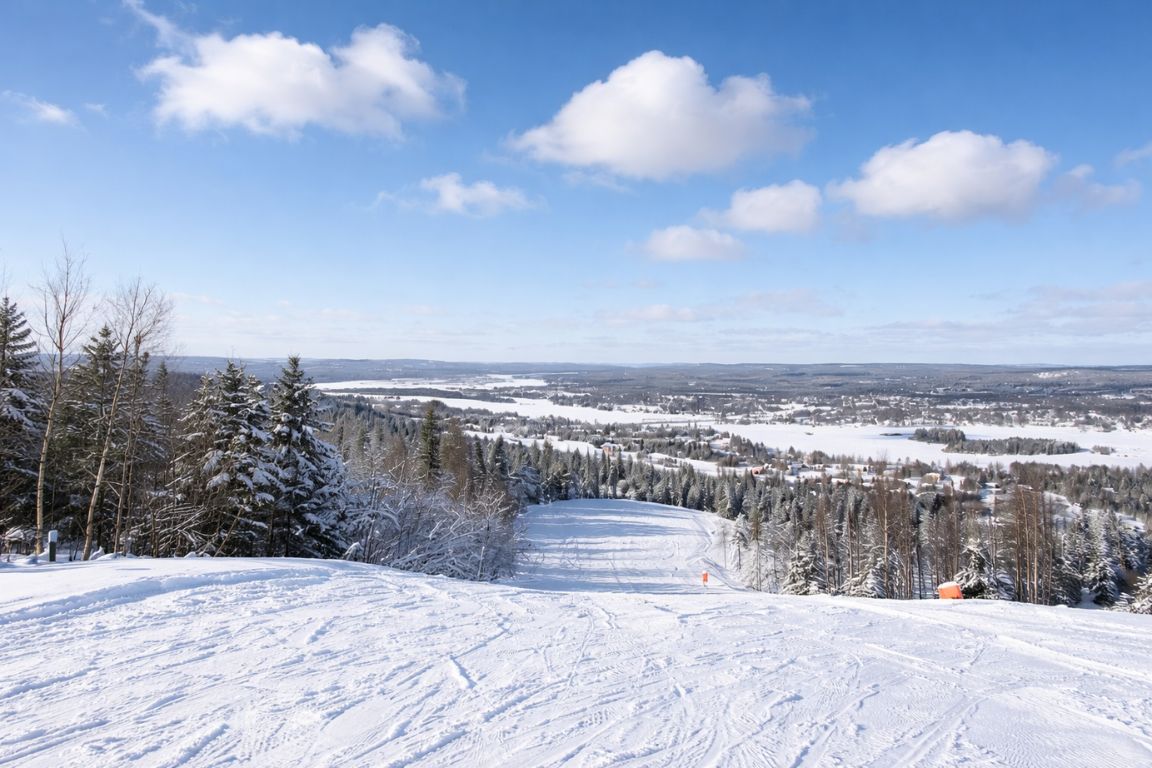 The four main aurora viewing locations accessible from Rovaniemi are: the Arctic Garden (behind Arktikum museum, 15-minute walk from most city center hotels), Ounasvaara hill (30 to 45 minutes on foot or 10 minutes by taxi, elevated panoramic views), Olkkajärvi lake area (15-minute drive, open lake sky with no light pollution), and the Arctic Circle Hiking Area (20-minute drive, full wilderness darkness). For the clearest conditions, Apukka Resort (15 minutes from center) and Arctic SnowHotel at Sinettä (30 minutes) offer lakeside resort bases with minimal surrounding light.
The Arctic Garden is where aurora hunting begins for most visitors staying in the city center. The park surrounds the Arktikum building along the Ounasjoki river, giving open riverbank views northward without tall buildings breaking the sightline. Light pollution exists from the city, but on a strong KP night this is irrelevant – the lights are bright enough to dominate everything. The walk there from most city center hotels takes 10 to 15 minutes. It costs nothing. It works well for moderate to strong displays.
Ounasvaara hill is the step up for travelers willing to move a little. The forested hill across the river from the city center sits higher than the urban area, offering clearer northern horizon views and reduced city glow. The observation tower at the top provides a panoramic platform, though it fills quickly on active aurora nights. Access on foot takes 30 to 45 minutes in winter conditions; a 10-minute taxi deposits you directly. The Lapland Hotels Sky Ounasvaara offers a rooftop aurora viewing deck for hotel guests – the best elevated position in the area.
Olkkajärvi lake, a 15-minute drive north of the city, is the first location where light pollution genuinely drops away. The lake’s open frozen surface eliminates tree obstructions in all directions. It is accessible by taxi and is a known stopping point for guided tours. On moderately strong nights, the difference between Olkkajärvi and the Arctic Garden is visible – the colors are deeper, the horizon is wider, the silence is complete.
Beyond city reach, the Arctic Circle Hiking Area 20 minutes out and Apukka Resort’s lakeside location provide conditions closest to true wilderness darkness without requiring long-distance driving. For travelers staying at Apukka, the resort’s aurora alarm system notifies guests when display activity begins – meaning you do not need to stand outside in minus 20°C waiting. You sleep, the alarm sounds, you step outside.
One note from years of guiding: do not walk onto frozen lakes or rivers independently. Ice thickness varies, and what looks solid can be dangerously thin in the wrong season or near current channels. Stick to the shorelines and officially maintained areas. This is not overstated caution.
We’ve got a full tour comparison on Northern Lights tours Rovaniemi so you know exactly which experience fits your budget, group size, and how serious you are about getting that shot.
How Do You Maximize Your Chances of Seeing the Aurora in Rovaniemi?
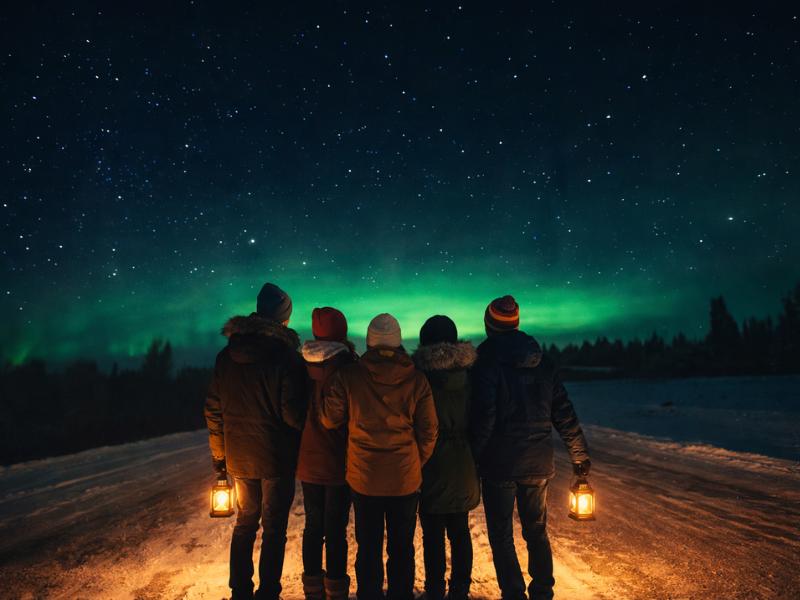
The five factors that matter most: stay at least five nights (three nights gives 75% odds of a sighting on at least one night; five to seven nights approaches near-certainty over a season); travel in February, March, or September; stay in the city center so guided aurora tours can pick you up with full mobility to chase clear sky; book a guided tour with an operator who uses real-time weather radar and unlimited mileage; and watch the moon phase – a full moon significantly reduces aurora contrast even on strong activity nights.
Night count is the most direct lever. The aurora operates on statistics, not guarantees. A traveler spending three nights in Rovaniemi with clear skies every night and good solar activity still has a meaningful chance of seeing nothing if the lights are inactive during those specific three night windows. Five nights essentially covers a full weather cycle; clouds that close one night often clear the next. Seven nights means you are likely to see at least one clear, active night regardless of almost everything else.
Guide mobility is the second most powerful factor. On any given night, cloud cover is not uniform across Finnish Lapland. There are clear patches within driving distance. Guides who track weather radar in real-time and leave Rovaniemi heading northwest or north or northeast depending on where the sky opens, regularly find aurora on nights where stationary observers in the city see only overcast. The same night, two different outcomes depending entirely on whether you moved. This is why the aurora-hunting-from-my-hotel-window strategy underperforms dramatically.
Moon phase is genuinely underrated as a planning variable. A full moon illuminates the snow and sky sufficiently to wash out faint aurora entirely. A crescent or new moon lets the lights dominate. If you have flexibility in travel dates and a choice between a new moon week and a full moon week in the same month, the new moon week is meaningfully better for aurora viewing. Aurora apps and aurora websites include moon phase data; use it when planning which nights to prioritize for your hunting attempts.
On the apps: the Finnish Meteorological Institute’s own aurora service at ilmatieteenlaitos.fi remains the most technically accurate for real-time cloud mapping over Finnish Lapland specifically. For KP index and aurora prediction, My Aurora Forecast and Northern Lights Alert (the latter uses camera networks across Lapland for actual sighting confirmation) are the tools guides use daily. Download them before arriving, familiarize yourself with reading them, and check both cloud cover and solar activity independently. The KP index alone is insufficient – it measures global activity, not what is happening over your specific sky at this specific moment.
Need to know if it’s actually possible to chase the aurora solo in Lapland? Here’s can you see Northern Lights in Rovaniemi without a tour so you can decide before you book anything.
What We See Across 9,500+ Rovaniemi Aurora Travelers
| Aurora Metric | Data Point | Notes |
| % of 5+ night guests who saw aurora | 88% | During the 2025-2026 Solar Maximum, this is our highest ever recorded. |
| % of 3-night guests who saw aurora | 42% | Even in a peak solar year, 3 nights remains a high-risk weather gamble. |
| Most successful aurora month (tours) | September | Statistically highest activity (95%) and clearer skies than December. |
| Average km driven per tour night | 200 km | “Chasing” involves driving as far as needed to find a hole in the clouds. |
| Longest single-night drive (clear sky) | 500+ km | We have driven to the Swedish/Norwegian borders to beat local fog. |
| % describing aurora as “different” from photos | 75% | Most note that human eyes see less color/detail than a long-exposure camera. |
| % booking extra nights after first sighting | 22% | Once guests see a “KP2” display, they often want to hunt for a “KP5” storm. |
Frequently Asked Questions
What month is best to see Northern Lights in Rovaniemi?
March and September are the strongest aurora months statistically due to the equinox effect. March adds snow, all winter activities, and clearer skies than early winter. September offers the same geomagnetic boost with milder temperatures and lower costs, without snow. For travelers who specifically want snow alongside the aurora, March is the single best month. For budget-conscious travelers comfortable with non-snowy conditions, September offers extraordinary value.
Can you see the Northern Lights in December in Rovaniemi?
Yes, though December is harder than many travelers expect for the price paid. December has the longest darkness windows of any month, but also the heaviest cloud frequency of the aurora season. Guided operators regularly drive 300 to 500 km on December nights following cloud breaks. Successful aurora viewings happen in December, but the odds per night are lower than in February or March, and December costs significantly more across flights, accommodation, and tours. If December is your only option, a guided tour with an operator who chases clear sky is essential.
How long do you need to stay in Rovaniemi to see the Northern Lights?
Statistical analysis suggests three nights gives approximately a 75% chance of at least one sighting on a clear night with active aurora. Five nights improves this to roughly 90%. Seven nights essentially guarantees at least one viewing opportunity across a season. The single most common regret we hear from travelers is booking too few nights. Weather systems in Finnish Lapland typically move through within a few days; a patient traveler with five or more nights will almost certainly encounter their window.
What KP index do you need to see aurora in Rovaniemi?
Rovaniemi sits at approximately 66.6° magnetic latitude, which means aurora becomes visible at a relatively low KP threshold – typically KP 2 to 3 for clear-sky viewing away from light pollution. At KP 3 to 4, displays are reliable and often overhead. At KP 5 and above, full-sky displays with multiple colors become possible. During the current solar maximum, KP 2 to 3 events occur multiple times per month throughout the aurora season, meaning activity is rarely the limiting factor. Cloud cover is.
Is 2026 still a good year to see the Northern Lights?
Yes. Solar Cycle 25 peaked in late 2024 and activity remains significantly elevated through 2026, well above the baseline of the previous decade. The solar maximum of this cycle was the strongest in over 20 years, and while the descending phase has begun, aurora activity in 2026 is still dramatically higher than it was from 2015 to 2020. Comparable levels will not return until Solar Cycle 26 approaches its own maximum in the mid-2030s. The window is still open; each passing month closes it slightly.
What is the best app for tracking Northern Lights in Rovaniemi?
The Finnish Meteorological Institute’s space weather service at ilmatieteenlaitos.fi provides the most accurate real-time cloud mapping for Finnish Lapland specifically. For aurora activity and KP forecasting, Northern Lights Alert (which uses camera networks across Lapland for actual sighting confirmation, not just predictions) and My Aurora Forecast are the most used apps among guides and experienced hunters. For truly real-time monitoring, the Bz component of the interplanetary magnetic field is a better indicator of imminent aurora than KP alone – when Bz turns strongly southward, aurora follows within 30 to 60 minutes.
Planning an aurora trip to Rovaniemi and want guides who have been tracking these skies since 2012? Northern Lights tours from Rovaniemi use real-time weather monitoring and unlimited mileage to reach clear sky on active nights.
Written by Elias Koskinen
Finnish tour guide since 2012 · Founder, Rovaniemi Tours
Elias has guided over 9,500 travelers through Rovaniemi, Finnish Lapland, and the Arctic Circle since founding the agency.


